
Green Choice · Long Island, since 2005
Water damage restoration on Long Island, day or night
Burst pipe, flooded basement, ceiling leak or sewage backup? Green Choice pumps out the water, dries your home down to the framing and handles the paperwork with your insurance company. We answer 24 hours a day from our Huntington Station shop and send a crew across Nassau and Suffolk. Call 516-905-5970 or send the dispatch ticket and we call you back in minutes.
- Open 24 hours, 7 days
- Licensed and insured
- We bill your insurance
- Certified technicians
We do not guess when a wall is dry. We measure it every day until the reading is back to normal.
What we restore
One call covers the water, the drying and the rebuild
You should not have to hire one company to pump, another to dry and a third to fix the drywall. Our crews do the emergency work and the repairs, so one team knows your house from the first visit to the last coat of paint.
- Water extraction and cleanupStanding water out fast with truck-mounted pumps, then a full dry-down.
- Flooded basement cleanupSump failures, heavy rain and groundwater pumped, cleaned and dried below grade.
- Burst pipe and leak repairSplit supply lines, frozen pipes and hidden leaks found, dried and repaired.
- Storm and flood damageNor'easters, hurricanes and roof leaks cleaned up and dried out.
- Mold remediationContain, remove and treat mold after a leak, then dry so it stays gone.
- Sewage backup cleanupCategory 3 black water removed with full protection and disinfection.
- Fire and smoke damageSoot, smoke odor and the water left after the fire department leaves.
- Structural drying and repairAir movers, dehumidifiers and daily readings, then drywall, floors and paint.
Before the truck gets there
What to do in the first hour
These four steps protect your family and save real money on the repair. Do them in this order, only if it is safe.
Step 1
Stop the water
Close the main shutoff, usually in the basement where the water line comes through the foundation wall. For a toilet or sink, use the small valve under it.
Step 2
Cut the power
If water is near outlets, a panel or a furnace, switch off those rooms at the breaker. Never walk into standing water with live power around it.
Step 3
Take photos
Photograph the water, the source and anything damaged before you move it. Your adjuster will ask for these.
Step 4
Call us
Call 516-905-5970. While we drive, lift rugs and furniture legs off wet floors and move valuables upstairs.
Know what you are dealing with
The three categories of water
The source of the water decides how it has to be cleaned. This is the same standard insurance adjusters use, and it changes what can be saved.
Category 1: clean water
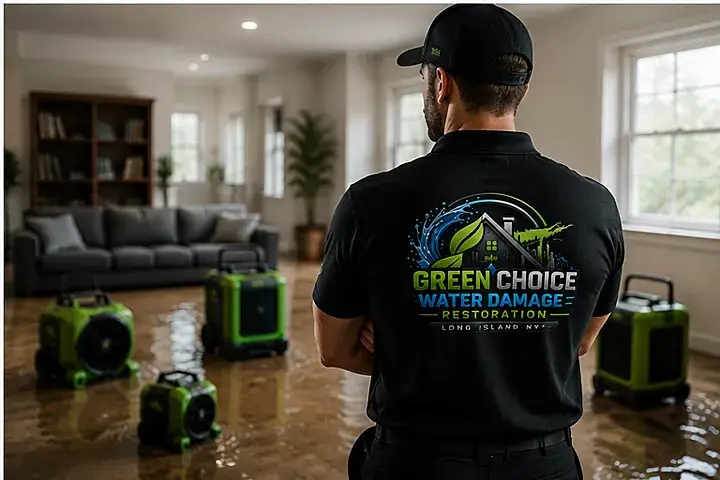
A broken supply line, an overflowing sink, a water heater that let go. Clean at first, but after a day or two sitting in carpet and drywall it starts to turn. Fast extraction usually saves most materials.
Category 2: gray water
Washing machine and dishwasher discharge, sump pump overflow, a toilet overflow with no waste in it. It carries bacteria, so carpet pad is usually thrown out and surfaces are cleaned with an antimicrobial.
Category 3: black water
Sewage, toilet backups with waste and outside flood water. This is a health hazard. Soaked drywall, insulation, carpet and pad are removed, and the area is disinfected before drying.
Insurance, made simple
We do the claim paperwork with you
Most homeowners policies cover water damage that is sudden and accidental: a burst pipe, a failed washing machine hose, a water heater that splits. Slow leaks and flood water from outside are usually treated differently.
From the first visit we document the loss the way adjusters need it. You get photos, daily moisture logs and a written scope. We can bill your insurance company directly, so in a covered claim you mostly deal with your deductible.
Why a local crew matters
Based in Huntington Station, not a call center
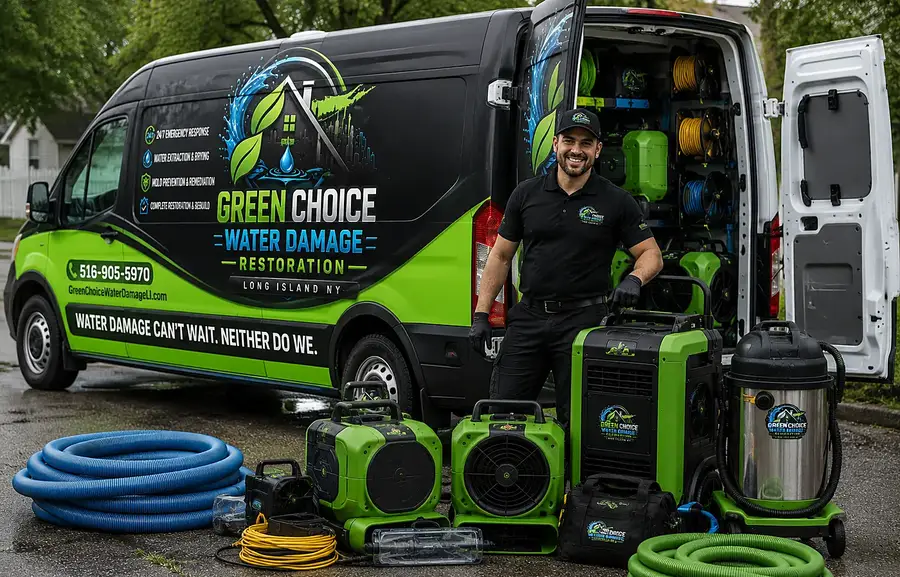
Green Choice has been cleaning and restoring Long Island homes since 2005. Our shop is at 30 Lynch St in Huntington Station, a few minutes from Route 110 and the Northern State. When you call, you reach our own dispatch, not a national line that sells your job to whoever is free.
Our technicians are certified and we stand behind the work with a 100% satisfaction guarantee. If something is not right, we come back and fix it.
Where we work
Water damage help across Nassau and Suffolk
We cover all of Long Island from Huntington Station. These are the towns we get called to most. Each page has local details, from the soil to the houses.
Straight answers
Water damage questions we hear every week
How fast can a crew get to my house?
We answer the phone 24 hours a day and send the nearest crew right away. Our shop is in Huntington Station, so most homes in western Suffolk and eastern Nassau are a short drive. When you call, the dispatcher gives you a real arrival window for your address.
Do you work with my insurance company?
Yes. We photograph the damage, take moisture readings every day and write the scope of work the way adjusters want to see it. We can bill your insurance company directly, so in most covered claims you deal with your deductible and we deal with the paperwork.
How long does it take to dry a house after a leak?
Most rooms dry in three to five days once extraction is done and the air movers and dehumidifiers are running. Thick materials like hardwood, plaster and subfloor can take longer. We measure moisture every day and only pull the equipment when the readings say the structure is dry.
Should I wait for the adjuster before calling you?
No. Your policy expects you to stop the damage from getting worse, and waiting can hurt your claim. Call us, we document everything before we touch it, and the adjuster gets photos, readings and notes from the first hour.
Do you handle sewage backups?
Yes. Sewage is category 3 water and we treat it that way: protective gear, containment, removal of soaked porous materials, disinfection and drying. Do not try to clean sewage yourself with a shop vac and bleach.
Can you stop mold after a flood?
Fast drying is the best mold prevention there is. If mold has already started, we contain the area, remove what cannot be saved, clean the framing and dry it down so it does not come back.