
Short answer: If a pipe bursts, shut the main water valve, turn off power to wet areas and call Green Choice at 516-905-5970. We come 24/7, trace how far the water spread inside walls, floors and ceilings with moisture meters and a thermal camera, dry the structure and then repair the drywall, floors and finishes.
Where pipes burst in Long Island homes
Most of the burst pipe calls we take fall into a few patterns:
- Frozen pipes in an outside wall, a crawl space, an attached garage or under a kitchen sink on an exterior wall. They split during a hard freeze, then start spraying when the ice melts, often a day later.
- Old copper and galvanized lines in houses built before the 1980s. Pinhole leaks can drip inside a wall for months before a joint finally gives.
- Supply lines to toilets, sinks, ice makers and dishwashers. Cheap plastic supply hoses crack, and the leak runs until someone notices.
- Radiator and baseboard heating pipes in older homes, especially when a boiler is shut off in a house that sits empty for the winter.
- Second floor bathrooms leaking through the floor into the ceiling below.
Hidden water is the real problem
Water from a burst pipe follows gravity and the framing. It runs along ceiling joists, down the inside of walls and under flooring. A ceiling can look like a small brown stain while the insulation above it is soaked across the whole room.
We map it before we decide anything. Pin meters read inside drywall and wood. Non-invasive meters scan large areas of floor. A thermal camera shows the cooler wet areas behind a wall. The result is a moisture map: a drawing of where the water is, with readings, that tells us exactly where to open up and where drying in place will work. Your adjuster gets a copy.
How we dry walls and ceilings
We open only what has to be opened. For a wet wall, that may mean drilling small holes behind the baseboard and pushing dry air into the cavity, instead of cutting out the whole wall. For a ceiling with soaked insulation, the wet insulation has to come out because it will not dry and it adds a lot of weight. A sagging ceiling is a safety issue, and we deal with that first.
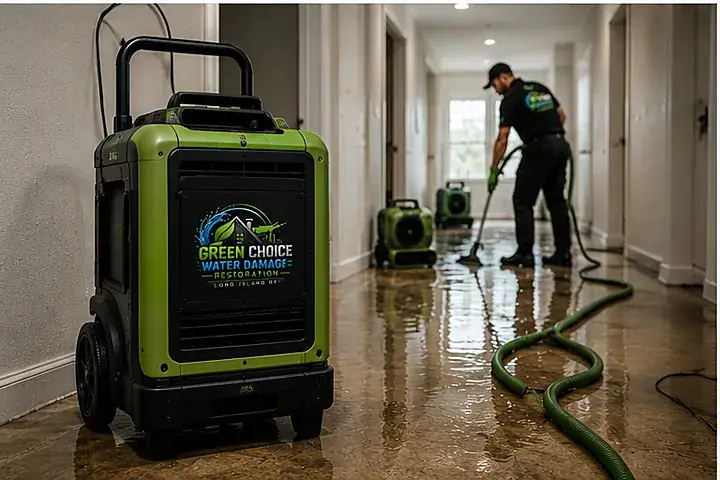
Then we build a drying setup for the space: air movers across wet surfaces, dehumidifiers to pull the water out of the air, and sometimes a contained drying chamber with plastic sheeting so the equipment works on a smaller space. We come back every day to take readings and move equipment where it is needed.
Do you fix the pipe?
The leaking pipe itself is repaired by a licensed plumber. If you do not have one, we can call one we work with so the repair and the drying are coordinated. What we handle is everything the water touched: drying, removal of damaged materials and the rebuild of drywall, ceilings, insulation, trim, cabinets and floors.
Condos, co-ops and multi-family
A leak in an upstairs unit can damage several units below. That brings in the building's insurance, each owner's policy and often a management company. We document each unit separately so every party has clean records, and we provide certificates of insurance to building management before we start.
Preventing frozen pipes
- Keep the heat at 55 degrees or higher, even when you are away
- Open cabinet doors under sinks on outside walls on very cold nights
- Shut off and drain outdoor hose bibs before the first freeze
- Insulate pipes in crawl spaces, garages and unheated basements
- If you leave for the winter, shut the main water valve and ask a plumber to drain the lines
- Know where your main shutoff is and make sure it turns; old gate valves often stick
What to do right now
Shut the main valve. Turn off power to any room where water is near electrical. Open a faucet on the lowest floor to drain pressure from the lines. Move valuables and photograph the damage. Then call us at 516-905-5970 or send the dispatch ticket on this page.
Questions about this service
My ceiling is bulging with water. What do I do?
Keep everyone out from under it. If it is safe, put a bucket under the lowest point and poke a small hole with a screwdriver to let the water drain in a controlled way. Then call us right away; a soaked ceiling can come down.
Is a burst pipe covered by insurance?
Sudden pipe bursts are usually covered under a standard homeowners policy. Slow leaks that went on for a long time are often denied as wear and tear. Your policy decides it, and we document the cause for the adjuster.
How do you find water inside a wall?
We use pin and pinless moisture meters and a thermal camera. Together they show how high and how far the water traveled without tearing the wall open.
Do you repair the drywall after?
Yes. Once the structure is dry, our crew replaces drywall, tapes, primes and paints, and fixes trim and floors so you do not need a second contractor.