
Short answer: Green Choice removes mold caused by leaks, floods and humidity in Long Island homes and businesses. We set up containment so spores do not spread, remove moldy drywall and insulation, clean and treat the framing, run air scrubbers and dry the area. Then we rebuild. Call 516-905-5970.
Why mold follows water damage
Mold spores are in every home already, floating in the air and settling on surfaces. They stay dormant until they find moisture. After a leak, wet drywall, carpet pad, wood and insulation can show growth within 24 to 48 hours in warm weather. That is why fast drying is the best mold prevention there is.
When drying is skipped or done halfway, mold grows where nobody looks: behind baseboards, inside wall cavities, under carpet pad and on the back side of drywall. You might first notice a musty smell, a stain that keeps coming back, or a family member whose allergies get worse at home.
Signs you may have a mold problem
- A musty, earthy smell in a basement, closet or bathroom
- Black, green or white spots on drywall, ceilings, grout or wood
- Paint bubbling or peeling on a wall that had a leak
- Warped baseboards or soft drywall near the floor
- Condensation on windows and pipes, especially in the basement in summer
- A leak you know about that was never professionally dried
How we remove mold
Find the moisture source
Mold comes back if the water does not stop. We find the cause first: a slow plumbing leak, a roof leak, condensation from an uninsulated duct, a bathroom with no exhaust fan, or a basement with high humidity.
Contain the area
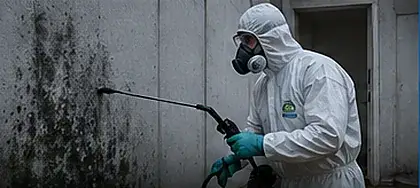
Disturbing mold releases spores. We build containment with plastic sheeting and zipper doors and use negative air machines with HEPA filters so the air flows into the work area, not out of it into the rest of the house.
Remove what cannot be cleaned
Moldy drywall, insulation, ceiling tiles and carpet pad are porous. Mold roots into them, so they are cut out, bagged and removed. We cut past the visible growth into clean material.
Clean what can be saved
Studs, joists, subfloor and concrete are cleaned by HEPA vacuuming, scrubbing and wiping with an antimicrobial. Spraying bleach on top does not remove mold; it bleaches the color and leaves the growth behind in the wood.
Dry and verify
We dry the framing to normal moisture levels, run HEPA air scrubbers to clean the air and check the area before rebuilding. If you want independent testing after the work, a separate mold assessor can test the air and surfaces before the walls are closed.
Rebuild
New insulation and drywall go up only on dry, clean framing. For bathrooms and basements, we can use mold resistant drywall.
Do you need mold testing?
If you can see mold and you know where the water came from, testing often does not change the plan; the mold has to come out either way. Testing is useful when you smell mold but cannot find it, when someone in the home has health concerns, for real estate sales, or when a landlord or insurer asks for proof. New York State has a mold law that, for larger jobs, separates the assessor who writes the plan from the company that does the removal. We follow it and can work from an assessor's plan.
Small spots you can clean yourself
A spot smaller than about ten square feet on a hard surface, like shower grout or a window sill, can usually be cleaned by the homeowner with detergent and water, wearing gloves and an N95 mask. Dry the area completely afterward. Anything larger, anything inside a wall, anything after sewage or flooding, or any mold in a home with someone who has asthma or a weak immune system is a job for a professional.
Keeping mold away on Long Island
- Run a dehumidifier in the basement from late spring through early fall and keep humidity under 50 percent
- Use the bathroom fan during showers and for 20 minutes after
- Fix leaks right away and have any water damage dried professionally
- Keep gutters clean and grade soil away from the foundation
- Do not store cardboard boxes directly on a basement floor
Questions about this service
Is black mold dangerous?
Any mold growing indoors can cause allergy symptoms and breathing problems, and some people are more sensitive than others. The color does not tell you how dangerous it is. Large growth should be removed by a professional with containment.
Will bleach kill mold?
Bleach can whiten mold on a hard surface, but it does not remove mold that has grown into drywall or wood, and the water in it can feed regrowth. Moldy porous materials need to be removed.
How long does mold remediation take?
A small area like the bottom of one wall may take a day. A full basement can take several days of removal and cleaning, plus drying time before the rebuild.
Does insurance cover mold?
Many policies cover mold only when it results from a covered water loss, like a burst pipe, and often with a dollar limit. Mold from long-term leaks or humidity is usually excluded. Check your policy.