
Short answer: For a flooded basement on Long Island, Green Choice pumps out the standing water, pulls wet carpet and pad, cuts out soaked drywall at the bottom of the walls, cleans with an antimicrobial and dries the slab and framing with commercial equipment. We work 24 hours a day across Nassau and Suffolk. Call 516-905-5970.
Why Long Island basements flood
Most of Long Island sits on sandy glacial soil. It drains well in a normal rain, but in a long soaking storm or a nor'easter the ground fills up and the water table rises. Water then pushes through cracks in the slab, the joint where the floor meets the wall, and old window wells.
South Shore homes in places like Massapequa sit close to the bay, so the water table is near the surface all year. North Shore and mid-Island homes are higher, but many have finished basements built in the 1960s and 70s with drywall and carpet laid straight on the slab, which turns a small seep into a big loss.
Inside the house, the most common causes we see are:
- A sump pump that burned out, lost power in a storm or had a stuck float switch
- A water heater tank that rusted through, often after 10 or more years
- A washing machine supply hose that burst
- A sewer line backup through a floor drain (see sewage cleanup)
- Frozen and split pipes on an outside wall in January
Our basement process
1. Pump and extract
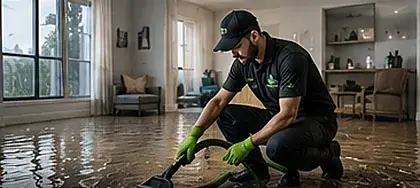
Submersible pumps move deep water out first. Then we extract carpet and the slab with truck-mounted equipment so we are not leaving a film of water behind.
2. Sort the materials
Carpet pad on a basement slab is almost always replaced. Drywall that wicked up water is cut at a straight line, usually 2 or 4 feet up, so the bottom plate and insulation can be removed and dried. Wood paneling, built-in shelving and furniture are checked one by one.
3. Clean and treat
Basement water is rarely perfectly clean by the time we get there. It picks up dirt from the floor, and a sump pit is gray water by definition. We clean the slab and the exposed framing and apply an antimicrobial before drying.
4. Dry the concrete and framing
Concrete holds a surprising amount of water and gives it back slowly. We run dehumidifiers sized for the space and air movers aimed at the walls and floor, and we check readings every day. A basement is not dry until the slab and the bottom plates read normal, even if the room feels dry.
5. Put it back together
Once everything is dry, our crew replaces drywall, insulation, baseboard and flooring. One team from start to finish means no gap between the drying company leaving and the contractor showing up.
Belongings in the basement
Basements are where people keep the things they do not use every day: photos, holiday boxes, kids' artwork, tools, area rugs. We help you move items out of the water and sort what can be cleaned. Wet cardboard boxes fall apart fast, so we move contents to a dry area first. Area rugs and Oriental rugs can go to the Green Choice rug cleaning facility to be washed and dried properly. Rug pickup and delivery is free.
Flood insurance and basements
This is the part that surprises people. A standard homeowners policy usually covers water from inside the house, like a burst pipe or a failed water heater. It usually does not cover water coming in from outside through the ground or from a storm surge. That needs flood insurance, which many South Shore homes carry. Sump pump overflow often needs its own endorsement on the policy.
We cannot tell you what your policy covers, but we document the source of the water clearly, which is what the adjuster decides on. More on this on our insurance claims page.
How to prevent the next one
- Test your sump pump each fall by pouring a bucket of water into the pit
- Add a battery backup sump pump; most basement floods we see happen when a storm knocks out power
- Replace washing machine rubber hoses with braided steel ones
- Check the water heater date on its label; tanks older than about 10 years are at risk
- Keep gutters clear and make sure downspouts drain several feet away from the foundation
- Store important boxes on shelves, in plastic bins, not on the floor
Questions about this service
How long does a flooded basement take to dry?
Most basements take three to five days of drying once the water is out and wet materials are removed. Concrete and block walls can take longer. We check readings daily and only remove the equipment when the materials read dry.
Do you have to cut the drywall?
Not always. If the water was clean and we get there fast, some walls dry in place. If drywall soaked up gray or black water, or has been wet more than a day or two, the bottom section is usually cut out so the insulation and framing behind it can dry.
Is basement flood water dangerous?
It can be. Sump water and groundwater carry bacteria, and any water that came up through a floor drain may contain sewage. Keep kids and pets out and do not touch it barehanded.
Can you work if the power is out?
Yes. Our trucks carry their own power for pumping and extraction. Drying equipment needs power, so we plan around the outage with you.