
Short answer: For a sewage backup, keep everyone out of the area, do not run water or flush toilets, and call Green Choice at 516-905-5970. We remove the sewage, take out contaminated porous materials like carpet and drywall, disinfect every surface, dry the structure and rebuild. We work 24/7 across Nassau and Suffolk.
Why sewage is different
Restoration standards sort water into three categories, and sewage is category 3, the worst. It contains bacteria like E. coli, viruses and parasites. Anything porous that it soaks, like carpet, pad, drywall, insulation, mattresses and upholstered furniture, cannot be made safe again and has to be removed. Hard surfaces can be cleaned and disinfected.
Wet vacs, mops and bleach do not get it done. A shop vac spreads contaminated mist into the air, and bleach on a wet slab breaks down fast and does not reach into cracks and wood.
Sewage on Long Island: cesspools and sewer lines
A big part of Long Island, especially in Suffolk County, is not on a public sewer. Homes use cesspools or septic systems in the yard. When a cesspool fills up or the ground around it is saturated after heavy rain, waste water has nowhere to go and comes back up through the lowest drain in the house, usually a basement floor drain, shower or toilet.
Homes on a public sewer, common in much of Nassau, can back up when the main line in the street is overloaded in a storm, or when the line from the house is blocked by roots, grease or a collapsed old pipe.
Either way, the cleanup is the same. The fix for the cause is different: a cesspool company to pump and inspect the system, or a plumber to camera and clear the line. We can recommend both and coordinate timing.
How we clean up a sewage backup
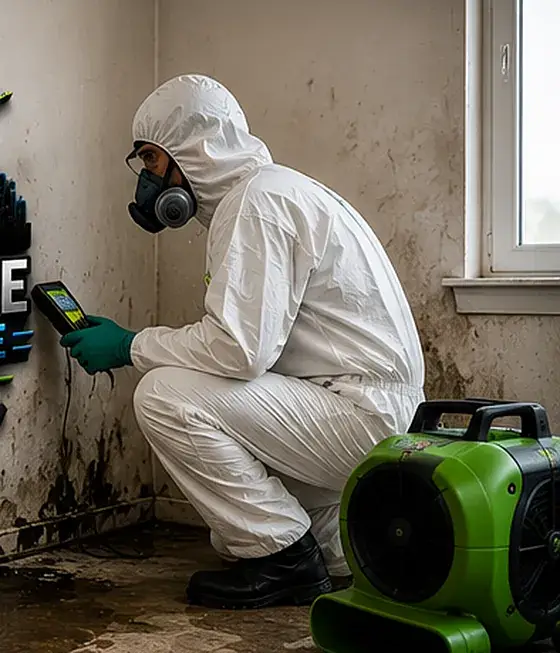
- Protect people. Our technicians wear protective suits, gloves, boots and respirators. We keep the family and pets away from the area and close off HVAC returns so air from the work zone does not circulate through the house.
- Contain. Plastic sheeting and negative air machines with HEPA filters keep contamination in the affected rooms.
- Remove the waste. Liquid and solids are extracted and disposed of properly.
- Remove contaminated materials. Carpet and pad, drywall above the wet line, insulation, baseboard and soaked furniture. We photograph and list every item for your claim.
- Clean and disinfect. Slab, framing and every hard surface are scrubbed and treated with a disinfectant made for this work.
- Dry. Dehumidifiers and air movers until the framing and concrete read dry.
- Rebuild. New insulation, drywall and flooring by our crew once the area passes.
What you should do while we are on the way
- Stop using water in the house: no flushing, showers, dishwasher or laundry. Every gallon you send down the drain can come back up.
- Keep children, older family members and pets away
- Turn off power to the area if water is near outlets or equipment and you can reach the panel safely
- Do not touch sewage or contaminated items without gloves and boots
- Throw away any food, medicine or cosmetics that were touched
- Take photos for insurance
Health and safety after the cleanup
Once the area is cleaned, disinfected and dry, it is safe to use again. We do not put materials back until it is. If anyone in the household is pregnant, elderly, has a weak immune system or gets sick after exposure, talk to a doctor.
Insurance for sewage backups
Many standard homeowners policies exclude sewer and drain backup unless you added a water backup endorsement. It is an inexpensive add-on and worth checking for, especially in older homes and homes with a cesspool. Commercial policies vary. We document the cause and the damage either way. Read more on our insurance claims page.
Commercial sewage cleanup
Restaurants, medical offices and multi-unit buildings cannot stay closed. We work in sections, keep clean areas separated and provide the documentation health inspectors, landlords and insurers may ask for, including certificates of insurance for building management.
Questions about this service
How long until we can use the basement again?
Most sewage cleanups take a day or two for removal and disinfection, then three to five days of drying, then the rebuild. We do not put new materials in until the area is clean and dry. If the backup was small and only reached tile or sealed concrete, it can be much faster.
Can I clean up a small sewage backup myself?
A tiny overflow on tile, like a toilet that overflowed once, can be cleaned with gloves, a disinfectant and good ventilation. Anything that reached carpet, drywall or a basement should be handled professionally.
Does carpet have to be thrown away after sewage?
Yes. Carpet and pad soaked by sewage cannot be made safe again and are removed. Hard floors like tile and sealed concrete are cleaned and disinfected.
Is a sewer backup covered by insurance?
Only if your policy includes sewer and drain backup coverage, which is usually an add-on. Check for a water backup endorsement.
Why did my basement drain back up after rain?
In homes on a cesspool, saturated ground can stop the system from draining. On a public sewer, the street main can overload in heavy rain. A cesspool company or plumber can find the cause.