
In short: Shut off the main water valve, turn off power to wet areas, take photos and video, move what you can, and call a restoration company and your insurance company. Do not wait for the adjuster before drying starts. Below is the full first hour, step by step, plus how to keep it from happening again this winter.
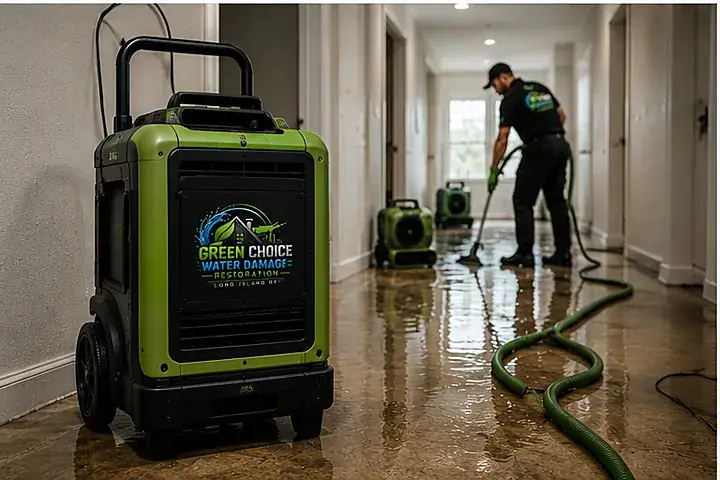
It is usually a sound first. A hiss behind a wall, a pop from the basement, or water dripping from a ceiling light. On Long Island it happens most on the first really cold nights of the year, when a pipe on an outside wall freezes overnight and splits. The ice holds the water back while it is frozen. When the house warms up in the morning, the water comes out all at once.
Our crews get these calls every winter, from Huntington Station hi-ranches to old colonials in Garden City. What happens in the first hour decides whether the job is a few days of drying or weeks of tear-out. Here is what to do, in order.
1. Shut off the water at the main valve
This is the most important step. Every minute the water runs, more of it soaks into the drywall, the subfloor and the framing.
Where to look in a typical Long Island house:
- Homes with a basement: on the front wall of the basement, where the water line comes in from the street, usually near the water meter.
- Hi-ranches and slab homes: in the garage, the utility room or a closet near the water heater.
- Older homes: it may be an old round gate valve. Turn it clockwise. If it will not move, do not force it until it snaps. Call your water district; they can shut the line at the curb.
If you cannot find the main, shut the small valve under the sink or behind the toilet closest to the leak if you can see where it is coming from.
2. Turn off power to the wet area
Water and electricity together are the real danger. If water is coming through a ceiling light, near outlets or into a basement with the electrical panel, turn off those circuits at the panel. Only do this if you can reach the panel while standing on a dry floor. If the panel itself is wet or you have to stand in water to reach it, stay out and tell the restoration company and the utility when you call.
3. Take photos and video before you clean
Your insurance company will want to see the damage as it was. Walk through with your phone and film everything: the source of the leak if you can see it, the water on the floor, the ceilings, the walls, furniture and anything stored on the floor. Say out loud what room you are in. It takes two minutes and it is the best evidence your claim will have.
4. Move what you can, fast
- Lift furniture legs onto aluminum foil or plastic lids so the wood does not soak up water and stain the carpet.
- Pick up rugs, papers, shoes, electronics and boxes off the floor. Wet cardboard falls apart within an hour.
- Take photos and important papers to a dry room first.
- Roll up area rugs and set them aside. Oriental and wool rugs need a proper wash and controlled drying. Do not dry them in the sun.
5. If the ceiling is sagging, stay out from under it
A ceiling that bulges down is holding water, and drywall soaked with water is heavy. Keep people and pets out of the room. If you want to relieve it and it is safe to reach, put a bucket under the lowest point and poke a small hole with a screwdriver from the side, not from underneath. If you are not sure, leave it for the crew.
6. Call a restoration company and your insurance company
Call both, but do not wait for the adjuster before drying starts. Most policies expect you to stop the damage from getting worse, and waiting days for an inspection lets the water spread and mold start. A good restoration company documents everything before touching it: photos, moisture readings and a written record of what was removed and why. That record goes to your adjuster. You can read more on our insurance claims page.
When you call, have this ready: where the water came from, how long it ran, which rooms and floors are wet, and whether the water is clean (a supply pipe) or dirty (a drain or toilet).
7. What not to do
- Do not use a household vacuum on water. It is an electrical hazard and it will not pull water out of carpet pad anyway.
- Do not turn the heat way up to dry things. Heat without moving the moisture out just makes the house humid and helps mold.
- Do not start tearing out drywall before photos and moisture readings. You may remove material that could have been dried, and the adjuster may question what was there.
- Do not throw away damaged items before they are photographed and listed.
What our crew does when we get there
We confirm the water is off and the area is safe, then find the edges of the water with moisture meters and a thermal camera, because water travels under cabinets and behind baseboards where you cannot see it. We extract the standing water, pull wet carpet pad, remove what cannot be dried, and set up air movers and dehumidifiers sized for the space. Then we come back every day to take readings until the walls, floors and framing read dry. That usually takes three to five days. The details are on our burst pipe page and our structural drying page.
How to keep it from happening this winter
Most of the burst pipes we see on Long Island are in the same places: kitchen sinks on outside walls, bathrooms built into old porches and additions, crawl spaces, unheated garages and outdoor spigots. A few habits prevent most of them:
- On nights in the teens or below, let the cold-water tap drip on sinks that sit on outside walls, and open the cabinet doors under them so warm air reaches the pipes.
- Shut off and drain outdoor spigots from the inside valve before the first freeze, and disconnect garden hoses.
- Wrap pipes in crawl spaces, garages and along outside walls with foam insulation.
- Never set the thermostat below about 55°F, even when you travel.
- If you leave the house for a week or more in winter, shut off the main water valve and ask someone to check the house. Many policies expect you to keep the heat on in an empty house.
- Put inexpensive water alarms near the water heater, the washing machine and under sinks. Some send an alert to your phone.
A tip from our crews
Find your main water valve today, while nothing is wrong. Put a tag on it and show everyone in the house where it is. If it is an old gate valve that will not turn, have a plumber replace it with a quarter-turn ball valve. In a burst pipe, the 30 seconds it takes to find and close that valve is the cheapest repair you will ever make.
Water in your home right now?
Call 516-905-5970. A real person answers 24/7 and sends a crew from Huntington Station across Nassau and Suffolk. Or send the dispatch ticket and we call you back.